by
American Diamond Logistics
on
July 3, 2026
•
0 min read

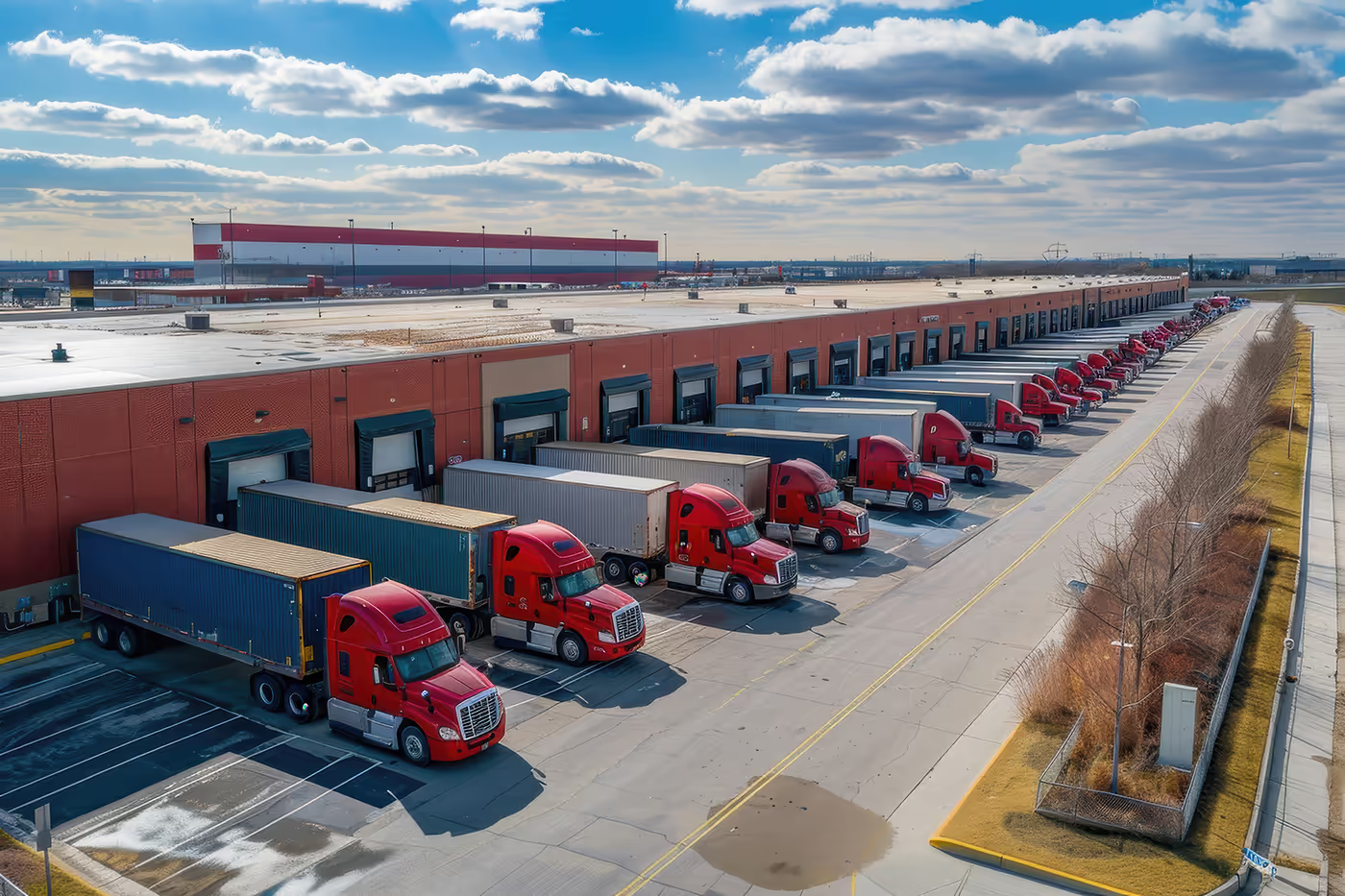
For shippers managing complex transportation needs, the choice between private, dedicated, or for-hire fleet models carries significant financial implications. Dedicated fleet solutions have gained traction in recent years as shippers seek greater consistency, control, and service quality in their logistics operations. But when does shifting to a dedicated fleet truly make financial sense?
This article identifies the scenarios in which dedicated fleets prove advantageous and explores the variables that logistics professionals must examine to evaluate the true cost-benefit profile of this approach.
A dedicated fleet is a set of trucks, drivers, and related assets assigned solely to serve the shipping needs of a particular company or facility. Managed either in-house or by a third-party provider, these fleets operate on a contractual basis, providing equipment and personnel exclusively for the shipper’s freight.
Key features of dedicated fleet service often include:
For many organizations, a dedicated fleet bridges the gap between the full flexibility of a for-hire network and the operational control of a private fleet.
Modern supply chains operate with extremely tight margins. Fluctuating spot rates, market capacity swings, regulatory requirements, and rising freight demand can all create uncertainty in transportation expenses. Shippers who rely solely on for-hire carriers may face challenges such as:
Managing these factors, while maintaining high service levels, motivates many companies to explore dedicated fleet solutions.
Dedicated fleets require a consistent baseline of freight to ensure full utilization of equipment and personnel. When a shipper’s volume meets or exceeds this baseline, dedicated service can reduce per-unit transportation costs. Irregular or low-volume shipments, on the other hand, may be more cost-effective through less-than-truckload (LTL) solutions. To explore LTL benefits, visit ADL Delivers’ LTL services.
Dedicated fleets are most efficient when routes are optimized for high density, such as delivering to multiple customers within a compact geographic area or executing predictable daily shuttle moves. This minimizes empty miles and ensures that asset utilization remains high.
Companies with strict service commitments or brand visibility needs—such as retailers, food distributors, and manufacturers of high-value goods—find that dedicated fleets provide the reliability and brand consistency necessary to differentiate their service.
A dedicated fleet typically operates on fixed or semi-variable costs, such as a set monthly rate plus a variable mileage charge. This model insulates shippers from volatile spot market price spikes and enables precise budget forecasting.
When freight demands specific equipment (refrigerated trucks, liftgates, custom trailers) or highly trained drivers, managing these needs with dedicated assets can be more efficient than sourcing capacity from the spot or contract market. In some cases, working with a dedicated service provider also supports regulatory compliance and safety program adherence.
It is critical to compare the all-in costs of dedicated fleet service to alternative solutions. Key considerations include:
A thorough total cost of ownership (TCO) analysis often highlights hidden savings achieved through more consistent service, reduction of detention fees, or avoidance of premium spot rates.
While dedicated fleets offer control and predictability, there are risks to consider:
To determine if a dedicated fleet makes financial sense:
For many organizations, working with an experienced transportation partner can streamline the dedicated fleet process and unlock additional efficiencies. Expert providers help with network design, compliance, and driver management, while providing access to state-of-the-art equipment.
If you are exploring dedicated truckload or hybrid fleet solutions, consider contacting providers that can tailor a solution to your logistics profile. To learn more about truckload services tailored to your needs, visit ADL Delivers’ Full Truckload Solutions.
By taking a structured, data-driven approach, logistics professionals can determine with confidence when a dedicated fleet investment is the right decision to control costs, improve service, and position operations for future growth.