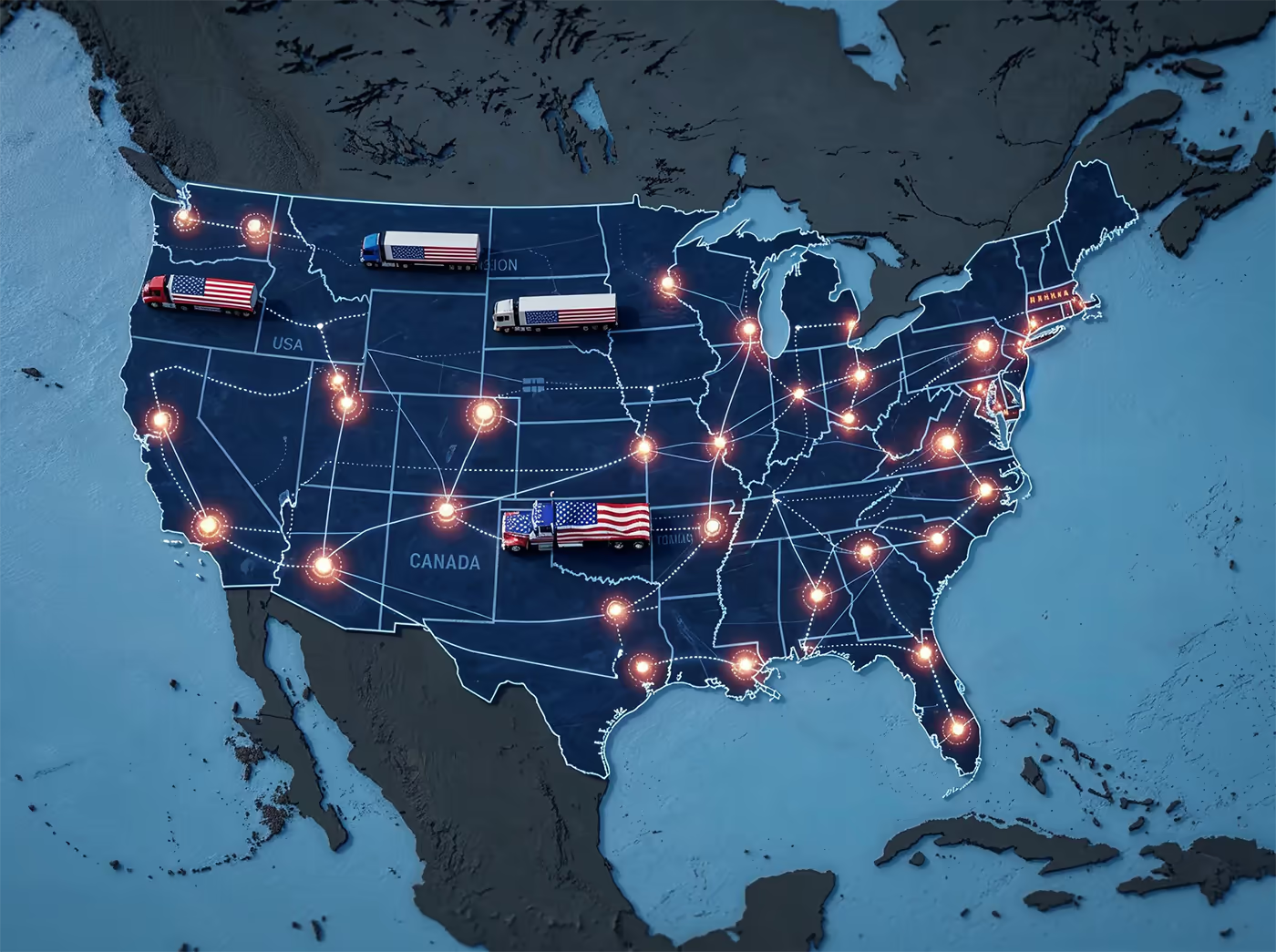
Network Optimization: When to Add or Exit a DC
Optimizing supply chain networks is essential to maintaining competitive advantage in the logistics industry. Distribution centers (DCs) form the backbone of any efficient supply chain, acting as critical nodes that directly affect service levels, transportation spend, network responsiveness, and overall cost structures. The decision to add or exit a DC is never taken lightly, as it reverberates throughout the entire logistics ecosystem. Understanding when—and why—to consider such a change requires a holistic assessment of costs, service level needs, geographic shifts, and organizational goals.
The Strategic Role of Distribution Centers
Distribution centers are more than just storage facilities. They are integral to inventory optimization, order cycle time, and fulfillment accuracy. The right number of strategically located DCs ensures that products move efficiently from manufacturing sites to customers, retailers, or other endpoints.
The decision to either add a new DC or exit an existing one should be based on a quantitative and qualitative assessment of network needs, including:
- Customer service goals (e.g., same-day or next-day delivery expectations)
- Total landed cost (including transportation, warehousing, and inventory holding costs)
- Shifting demand patterns or new customer geographies
- Resilience planning in the face of disruptions (e.g., weather, labor shortages)
Key Drivers for Adding a DC
- Expanding Market Reach
Companies experiencing growth in new areas may find their current network inadequate to meet service timelines cost-effectively. Adding a DC closer to high-growth markets shortens transit times and reduces transportation expenses, making it possible to meet stricter service-level agreements (SLAs). - Improving Service Levels
Increased customer expectations for rapid, reliable delivery—especially with the rise of e-commerce—often motivate organizations to reevaluate the distribution footprint. Adding a DC in strategic locations can optimize last-mile delivery, reduce split shipments, and improve order fill rates. - Reducing Transportation Costs
Transportation often accounts for the largest chunk of logistics expenses. When data reveals excessive line-haul distances or high freight costs on frequently served lanes, an additional DC may be the most effective way to rebalance networks and reduce out-of-route miles. - Mitigating Risk
Geographic diversification through network expansion improves supply chain resilience. Additional DCs act as insurance policies, providing alternative routing and inventory positioning options during disruptions.
Deciding to Exit a DC
While the addition of a distribution center can facilitate growth, market contraction or shifts in demand may present a rational case for exiting a location. This decision requires careful analysis and planning to ensure ongoing service integrity.
Common reasons to consider exiting a DC:
- Overcapacity and Redundancies
Market shrinkage, improved transportation infrastructure, or consolidation via acquisitions can leave a network with more capacity than required. Maintaining underutilized DCsinflates overhead without adding operational value. - Network Consolidation Initiatives
Organizations may seek to streamline their networks to achieve cost savings and operational simplicity. Leaner networks with fewer, larger DCs can lower fixed costs, improve labor efficiency, and reduce inventory safety stocks. - Advancements in Transportation
Improvements in line-haul capabilities or modal shifts (for example, intermodal freight) can make it feasible to serve the same territory from fewer locations, preserving service levels while optimizing distribution expenses. - Lease Expiration or Facility Obsolescence
As DC leases expire, companies may find that the cost or required investment to upgrade aging infrastructure is not justified by projected future demand.
Decision Framework: Analytical and Scenario Modeling
Network optimization is data-driven. Most organizations rely on sophisticated network modeling software to simulate the impact of adding or exiting DCs under various scenarios. These tools incorporate variables like demand density, transportation rates, inventory policies, and service requirements.
Best practice steps include:
- Collect Clean Data: Accurate shipment histories, customer locations, service requirements, and SKU-level details are essential.
- Define Objective Functions: Whether minimizing cost, meeting specific service levels, or both, it’s critical to establish what the optimized network should achieve.
- Run Scenarios: Model both the “as-is” network and alternatives with added or reduced DCs.
- Factor in Change Management: Consider the organizational impact—staffing, IT systems, customer communication, and transitional inventory flows.
For many organizations, running these analyses to inform strategic decisions can be resource-intensive. Connecting with third-party partners who specialize in warehousing
solutions can provide valuable insight and operational support during network change.
Real-World Considerations
Implementation Lead Time
Opening or closing a distribution center is a major project that requires significant lead time for site selection, permitting, workforce planning, and systems integration. Parallel planning and change management are critical to avoid disruptions.
Customer Communication
Changes in network structure may affect customer relationships, requiring proactive communication to manage expectations and build trust during transition.
Regulatory and Contractual Obligations
Depending on the region, exiting a DC may be subject to local labor laws, environmental considerations, and contractual obligations, all of which must be addressed early in the planning process.
Measuring Success
After network changes are implemented, logistics professionals should monitor key performance indicators such as:
- Average delivery time and service levels
- Total transportation and warehousing costs
- Inventory turnover and fill rates
- Customer satisfaction levels
Network optimization is not a static exercise; it’s an ongoing process that should adapt as market conditions and company objectives evolve.
For organizations seeking expert input and tailored modeling, consider requesting a quote from specialized third-party logistics partners with deep experience in network optimization and DC strategy.