
by
American Diamond Logistics
on
March 19, 2026
•
0 min read

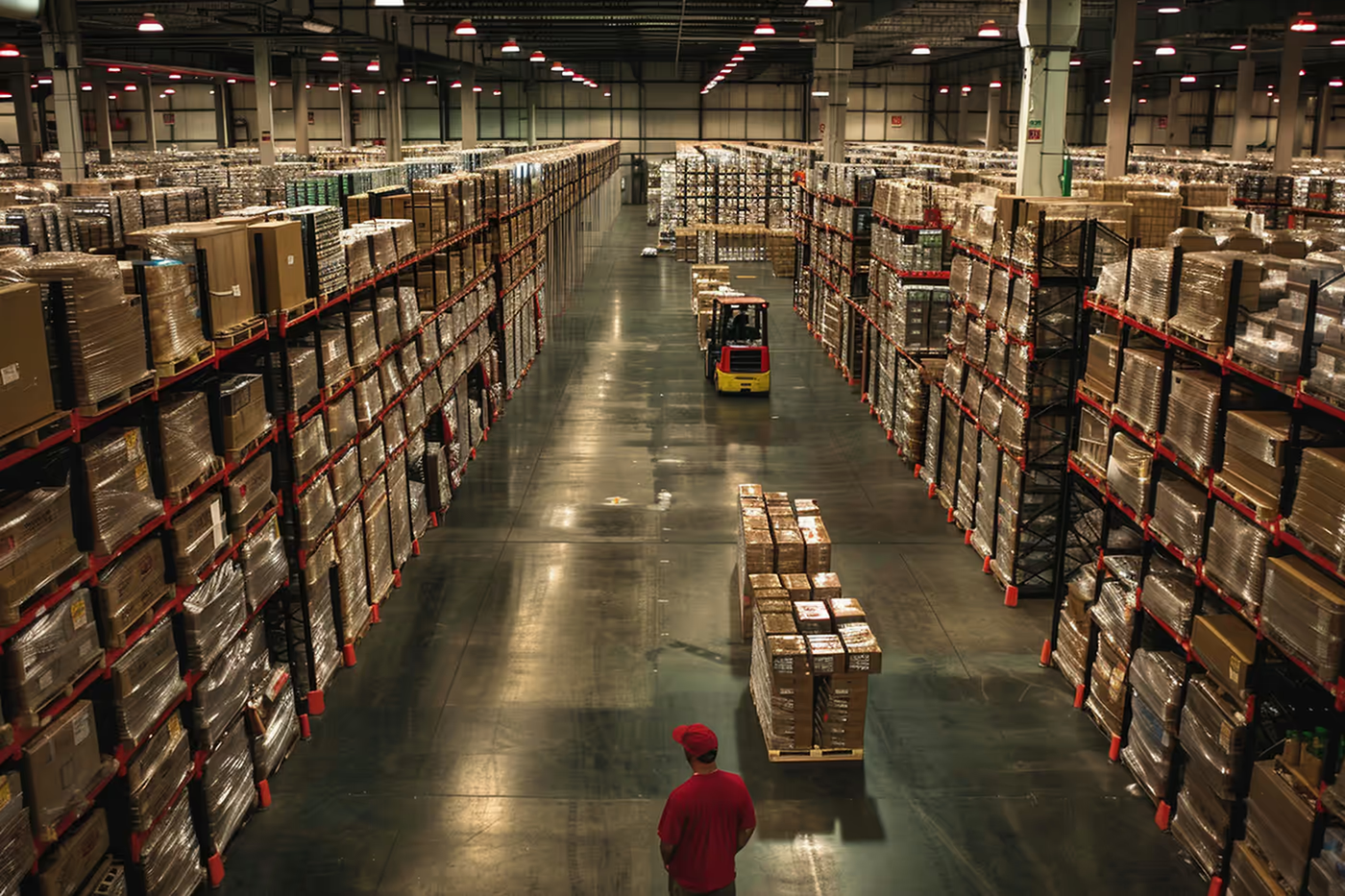
Traditional warehousing involves storing goods for an extended period before shipping them to customers or retail locations. Products arrive at the warehouse, are received and checked, stored on racks or pallet positions, and later picked, packed, and shipped as orders are released. This approach can manage both high and low inventory turns and accommodates varying demand cycles.
Traditional warehousing generally fits supply chains where demand is less predictable, or value-added services are essential. It also supports companies dealing with large, complex product assortments or long distribution lead times. For more on comprehensive warehousing solutions, visit ADL’s warehousing services page.
Cross-docking, by contrast, focuses on minimal storage. Goods arriving at the cross-dock facility are quickly sorted and transferred to outbound vehicles—often without ever being placed into long-term storage. The facility acts as a logistics hub rather than a warehouse, with a process designed to accelerate product flow from supplier to customer.
A cross-docking terminal often includes inbound and outbound dock doors positioned on opposite sides of the facility, enabling a direct flow-through of goods: “receive, sort, and ship.”
Cross-docking is ideal for fast-moving goods with predictable demand, consolidated shipments from multiple suppliers, and supply chains seeking minimal lead times.
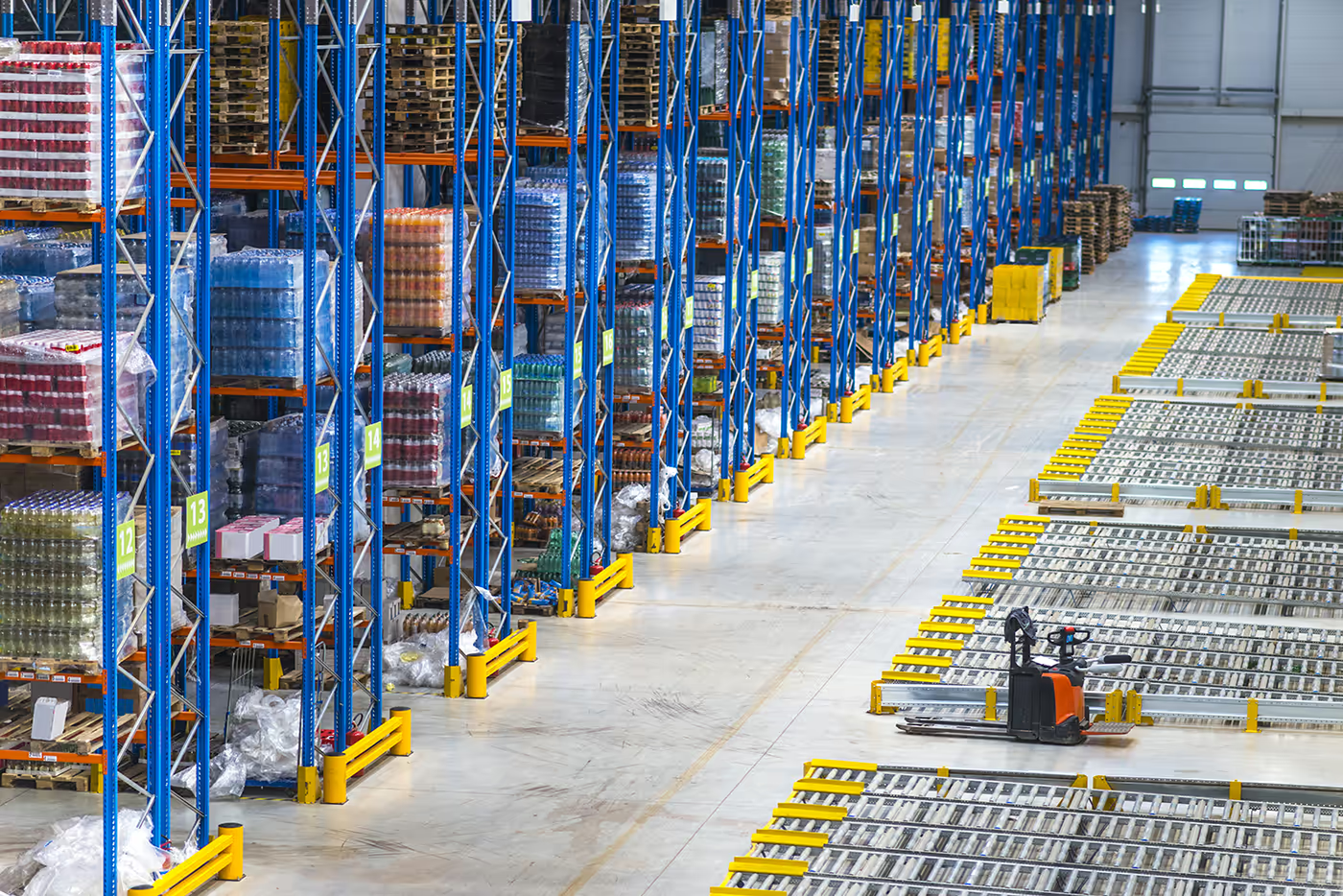
Traditional warehouses incur costs for inventory, insurance, space, and staff. Cross-docking offers potential savings but may increase transportation costs due to fragmented shipments. Careful analysis is required to determine the optimal balance.
Cross-docking speeds up the supply chain but demands precise timing across all partners. Any misalignment can create significant bottlenecks.
Both models benefit from warehouse management systems (WMS), but cross-docking often necessitates advanced IT capabilities for real-time coordination. Facility layout also differs: cross-docking terminals focus on maximizing process flow, while warehouses prioritize space utilization.
Traditional warehousing offers more flexibility in absorbing disruptions, while cross-docking is less forgiving to upstream supply or transportation delays.
Selecting the right blend of cross-docking and warehousing depends on customer expectations, order profiles, and distribution network complexity. Efficient cross-docking requires seamless cooperation among shippers, transportation providers, and IT systems; traditional warehousing depends on effective inventory control and value-added services.
Engaging an experienced logistics partner can help organizations analyze their flows, model costs, and design a distribution strategy that matches their business objectives. To discuss your requirements or request a tailored solution, contact us for a custom logistics quote.


